Sample article written for illustration. Not affiliated with Gymshark.

TL;DR: A well-built push pull legs routine hits each muscle group twice per week, lining up with research that intermediates grow best at 2-3 weekly sessions per muscle. When you pair smart exercise selection, 10-20 weekly hard sets, progressive overload, and solid recovery, a PPL workout split becomes a reliable engine for steady muscle and strength gains.
Training hard on random chest and arm days but your physique looks the same every month? A structured push pull legs routine gives you a clear plan so every rep pushes you closer to real size and strength, instead of just chasing soreness.
Instead of scattered bro-style sessions and skipped leg days, a PPL workout split organizes your week by movement patterns. Push days hit chest, shoulders, and triceps, pull days target back and biceps, and leg days handle quads, hamstrings, glutes, and calves.
For intermediate lifters, many coaches call this one of the best gym workout split for muscle growth. You can train each muscle around twice per week, manage fatigue, and still have a life outside the gym.
At Gymshark, we live this stuff. Our community, and the Gymshark Training Collection specifically, is built around people who want performance and style while they follow a serious plan. If you’re still debating training splits, start with our training splits guide and then lock this PPL setup in.
By the end, you’ll have a complete, plug-and-play push pull legs routine with exercises, sets, reps, rest times, and both 3-day and 6-day schedules. So what actually makes PPL so effective for building muscle?
A push pull legs routine splits your training into three sessions: push (chest, shoulders, triceps), pull (back, biceps, rear delts), and legs (quads, hamstrings, glutes, calves, plus core). You cycle through those sessions across the week, either once or twice.
On a 6-day PPL workout split, you run Push-Pull-Legs twice weekly. That means each major muscle group gets trained about two times per week, which research suggests is ideal for most intermediates aiming for hypertrophy.
According to the GeneticFFMI evidence-based template, intermediate lifters grow best training each muscle 2-3 times weekly. They explicitly recommend a 6x/week PPL for lifters with around 2-5 years of experience.
Muscle protein synthesis in trained lifters stays elevated for roughly 24-48 hours after lifting. That window, highlighted in the same muscle-building science article, lines up perfectly with hitting each muscle every 3-4 days using a push pull legs routine.
Another advantage: you spread upper-body volume across two days instead of cramming it into one giant upper session. The FitnessRec PPL hypertrophy guide notes that this improves set quality and recovery, which are key drivers of muscle gain.
According to the FitnessRec coaching staff, “The power of a PPL split is that it distributes upper body volume across two days instead of dumping everything into a single session. That leads to better quality sets, less fatigue per exercise, and more consistent progression over time.”
PPL shines for lifters who can train 3-6 days per week and want structure without overcomplicating things. Beginners can use a lower-volume push pull legs routine, but intermediates benefit most from the higher frequency and total weekly work.
Watch how a science-backed coach explains a complete push pull legs routine and common variations:
Both 3-day and 6-day versions of a push pull legs routine can build muscle. The right choice depends on your schedule, recovery, and how much total weekly volume you can handle consistently, not on ego or what your favorite influencer posts.
A 3-day PPL hits each session once per week, which still works when intensity is high. A 6-day PPL hits each muscle twice per week, making it a strong candidate for the best gym workout split for muscle growth if you can commit to the higher frequency.
If life is hectic or you are newer to structured training, start with a three-day PPL workout split. It keeps things simple, with focused sessions built around big lifts and a few accessories.
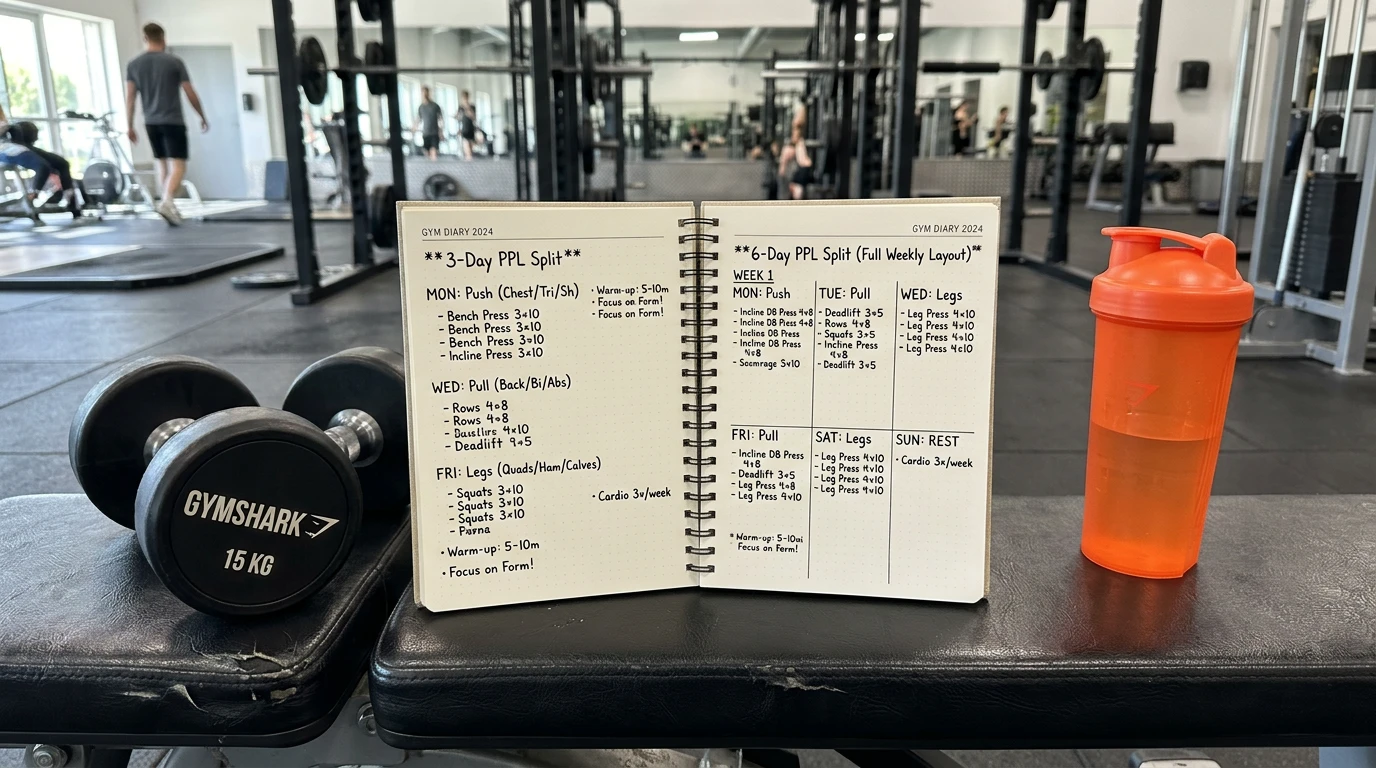
A sample 3-day layout for your push pull legs routine:
Weekly volume is lower than a 6-day setup, but you can still grow if you train close to failure on most sets. Aim for around 8-12 hard sets per major muscle group across the week, with controlled reps and solid form.
If you recover well and want maximum momentum, a 6 day push pull legs program doubles that frequency. Each muscle gets worked about every 3-4 days, aligning with muscle protein synthesis returning to baseline.
A classic 6-day push pull legs routine:
According to the ReviveStronger advanced hypertrophy slides, a Push-Legs-Pull rotation twice per week is an excellent way to distribute 10-20 sets per muscle while still recovering well.
The key is not just frequency, but total weekly sets. Aim for roughly 10-20 hard sets per muscle group per week, starting at the low end and building up. A 6 day push pull legs program might give each muscle 5-10 sets across its two weekly sessions.
Research summaries, such as this strength training frequency overview, show no clear advantage for 3x versus 2x weekly frequency when volume is matched. That means your PPL workout split should prioritize sustainable volume and effort over chasing a magic frequency number.
Exercise selection makes or breaks your push pull legs routine. Build each session around heavy compound lifts for strength and efficiency, then add accessories to target lagging muscles, improve balance, and increase training volume where you need it most.
Start push days with big presses while you are fresh, then move into more targeted isolation work. A strong upper push session in your push pull legs routine might look like this:
Stick to movements you can load safely and progress over months, not weeks. Wear supportive tops from the Gymshark Training Collection so overhead and bench presses feel unrestricted but secure across your shoulders and chest.
Pull days center around heavy rows and vertical pulls. You can place deadlift variations here or on leg day; choose whichever lets you recover best in your overall push pull legs routine.
Focus on feeling your lats and upper back rather than just moving weight. Strong back work balances the chest-heavy push days in your PPL workout split and keeps your shoulders healthier long term.
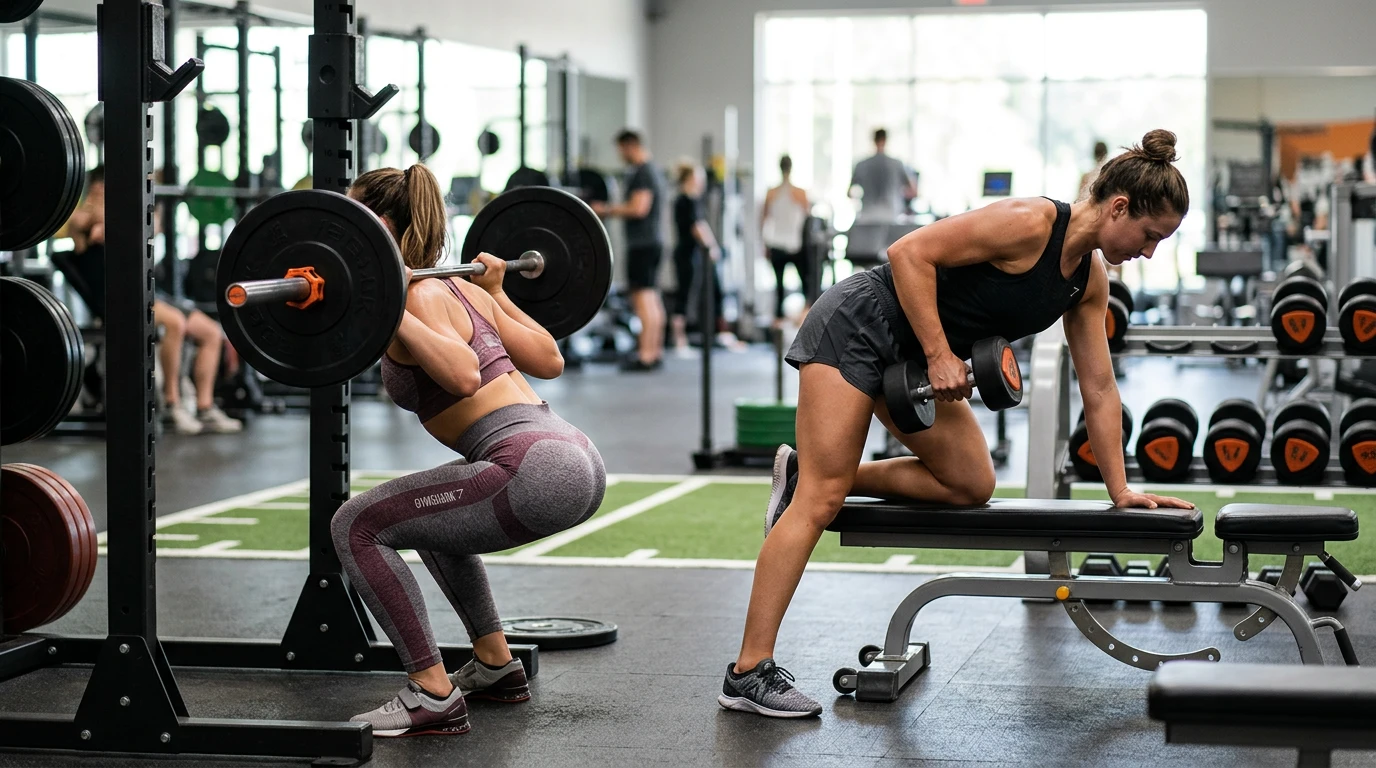
Leg day is where many lifters either grow or stall. A well-built lower session in a push pull legs routine hits the big patterns: squat, hinge, lunge, and machine work for extra volume.
Order exercises from heaviest, most technical lifts to lighter isolations. Deep squats and deadlifts feel smoother when you are in breathable, non-slip leggings or shorts and a secure sports bra or tank, like those in the Gymshark Training Collection.
Progressive overload is the engine that makes any PPL workout split actually build muscle. It means gradually making your training harder over time while maintaining form, so your body has no choice but to adapt.
You can overload a push pull legs routine by adding weight, reps, sets, slowing your tempo, or trimming rest periods. Most lifters progress best using simple methods they can track easily.
To keep your push pull legs routine moving forward, use clear, repeatable progression rules. These work for almost every compound and accessory in your plan.
For a deeper breakdown of these concepts, check out our explanation of progressive overload. According to the GeneticFFMI coaching team, intermediates thrive when weekly volume and load climb gradually, not in huge jumps.
Take a bench press in a 6 day push pull legs program. Week one you might do 3 sets of 6-8 reps at 185 lb. When you can hit 8, 8, 8 with good form for two weeks, add 5 lb and repeat the process.
Across 4-6 weeks, you might move from 185 lb to 200-205 lb for the same rep range. Then you insert a lighter deload week, cutting sets or load by 30-40 percent, before pushing hard again.
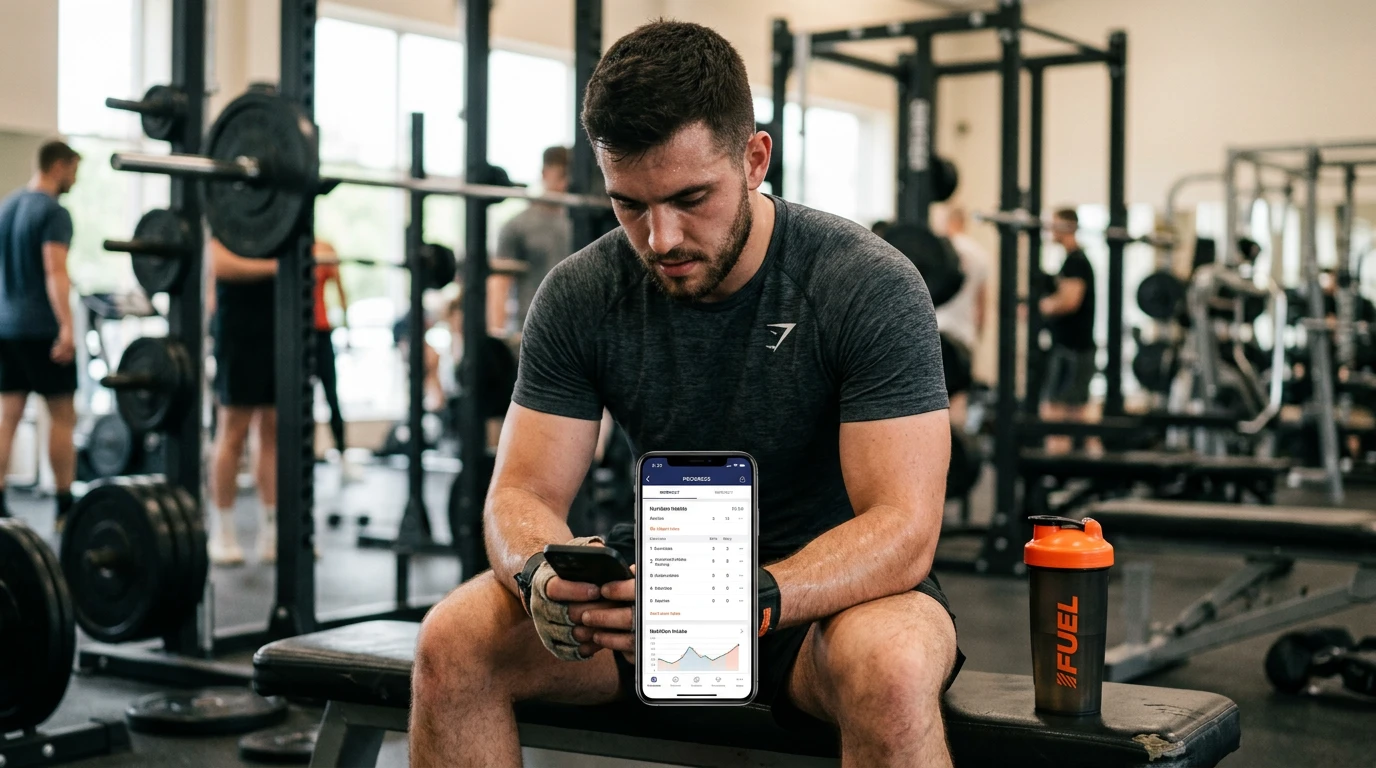
Track your lifts in a notebook or app and wear similar, comfortable gear each session. Consistent outfits from the Gymshark Training Collection or seamless sets help you focus on performance, not distractions from awkward fits or fabrics.
Even the best gym workout split for muscle growth will stall without recovery and nutrition. Muscles grow between sessions, not during them, which matters even more when a push pull legs routine hits everything twice a week.
A high-frequency PPL workout split demands that you respect recovery as much as your training log. Good sleep and smart volume adjustments keep your joints and nervous system from burning out.
Because muscle protein synthesis rises for 24-48 hours after lifting, according to GeneticFFMI’s muscle-building science, spacing your push, pull, and leg days across the week with rest or lighter days between heavy efforts is ideal.
Your push pull legs routine will feel very different fueled versus unfueled. Aim for a small calorie surplus during mass phases and maintain high protein year-round to support repair and growth.
Simple supplements like creatine, caffeine, and whey can help, but they sit on top of food and sleep, not instead. Comfortable, sweat-wicking outfits from our seamless workout collection make long weeks on a PPL workout split easier by keeping distractions and chafing low.
Plenty of people jump into a push pull legs routine and stall fast. Most issues come down to doing too much, moving poorly, programming lopsided volume, or never taking a break when their body is asking for one.
Going from three random weekly sessions to a high-volume 6 day push pull legs program overnight is a recipe for fatigue. Start on the low end of volume, see how you recover, then build up slowly over months.
Ego lifting ruins many PPL plans. Rushing squats, rows, and presses just to throw more plates on the bar means your joints take the load instead of your muscles.
Use simple cues: “chest up, knees out” on squats, “pull elbows toward hips” on rows, “drive through mid-foot” on leg presses. High-tension, well-controlled sets inside your push pull legs routine will always beat sloppy heavy reps.
Another trap is overloading chest and arms while neglecting back and legs. Track weekly sets per muscle group to keep your PPL workout split balanced from front to back.
Deloads matter too. When you feel persistently tired, achy, and weaker across several sessions, drop sets or load by around 30-40 percent for a week. According to advanced hypertrophy resources, that reset can reignite progress.
Yes, a push pull legs routine is excellent for building muscle, especially for intermediate lifters. It typically hits each muscle group twice per week, which research shows is an effective training frequency when paired with 10-20 hard sets per muscle. The structure also makes progressive overload and fatigue management much easier than random workouts.
Choose a 3-day push pull legs routine if you have a busy schedule or are newer to structured lifting. Pick a 6-day PPL split if you recover well, want faster progress, and can commit to more weekly sessions. Both can build muscle as long as your weekly volume, effort, and recovery are on point.
Most lifters grow best with 10-20 hard sets per muscle group per week on a PPL workout split. Use lower reps (5-8) for heavy compound lifts and moderate reps (8-15) for accessories. Train within 1-3 reps of failure on most sets, and rest 2-3 minutes for big lifts and 60-90 seconds for isolations.
A 6 day push pull legs program is not inherently too much for intermediates, but it can be if volume and recovery are mismanaged. Start at the low end of weekly sets, monitor soreness and performance, and only add volume when you’re recovering well. Adequate sleep, nutrition, and occasional deload weeks are crucial at this frequency.
Beginners can use a push pull legs routine, but they should start with lower volume and often a 3-day version. Focus on learning technique on core lifts, using moderate loads, and leaving a couple of reps in the tank. As strength, skill, and recovery improve, they can gradually increase sets or transition to a higher-frequency PPL split.
You now have the building blocks of a structured PPL workout split: clear push, pull, and leg templates, both 3-day and 6-day weekly structures, and simple progression rules that keep strength and size moving up over time.
A consistent, well-designed push pull legs routine will beat random workouts every time. You do not need the perfect plan; you just need a solid framework, steady effort, and enough patience to let the work compound month after month.
Whether you are a young lifter chasing new PRs, a female gym-goer who wants strong, sculpted legs, or a bodybuilder refining your physique, own your progress. Log your lifts, show up for each session, and let smart training do the rest.
When you are ready to run this plan, kit yourself out in performance-focused apparel that moves with you. Explore the Gymshark Training Collection and more at Gymshark, then push, pull, and squat your way into your strongest training phase yet.